THE IMPORTANCE OF PROPER FILM STORAGE
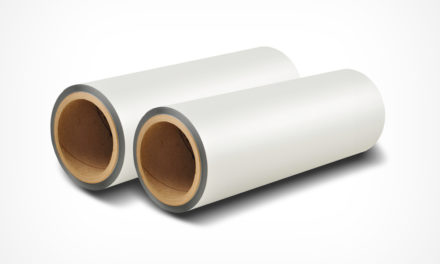
Proper laminate and film storage is critical to preserving the quality of materials, reducing waste, and ensuring each finished print is the highest possible quality. When it comes to environmentally sensitive products like laminates, even seemingly minor mistakes can lead to damaged edges, poor adhesion, telescoping, and other forms of damage. We are going to cover some best practices and helpful tips that will teach you how to store film rolls so they stay in pristine condition.
BEST PRACTICES FOR FILM STORAGE
These tips go over a variety of factors that can negatively impact the shelf life of laminate rolls and offer some practical insights about how to store film.
- Maintain a Controlled Environment
A stable, temperature-controlled space is essential for proper laminate storage. Materials should always be stored between 60°F and 80°F and protected from direct sunlight, moisture, and contaminants. Environmental fluctuations can degrade film performance and shorten shelf life.
- Store Rolls in the Correct Position
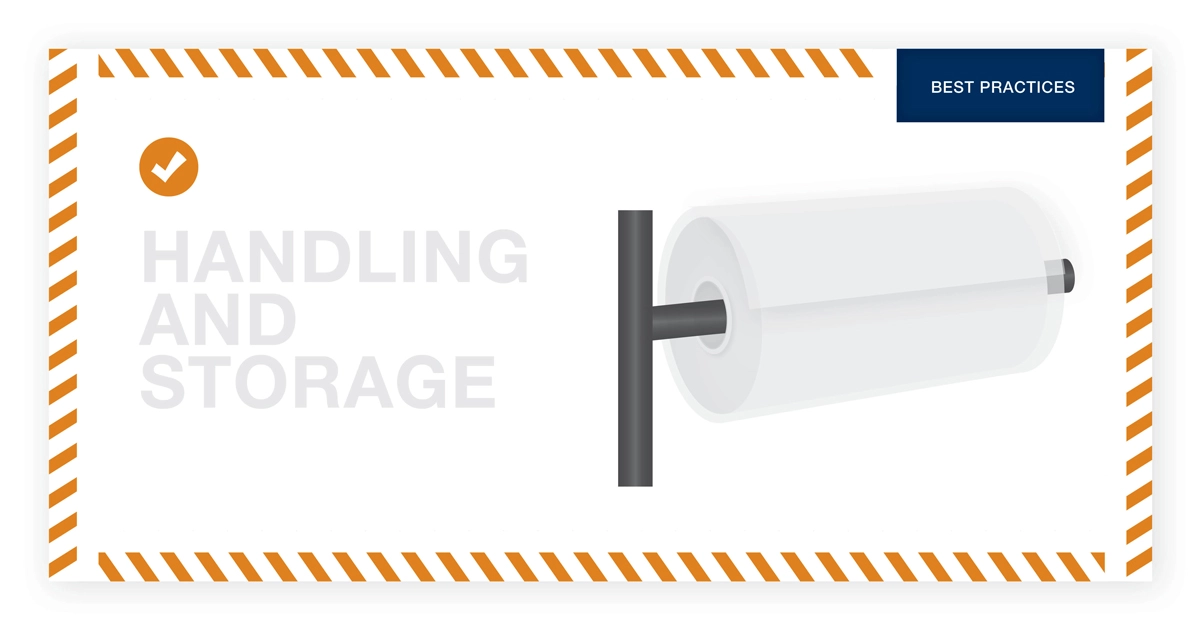
Never place film rolls directly on wire or steel racking. Instead, use roll cradles or pallets with a thin cardboard cushion to prevent pressure points and deformation. Proper support is a fundamental necessity for film storage and helps avoid costly material damage.
- Handle Rolls With Care
Always use proper lifting equipment when moving rolls. High drops or forceful impacts with rolls can cause telescoping and edge damage, two of the most common issues in laminate storage facilities. Walking rolls on their ends may seem efficient, but it can damage the film and introduce contaminants. Nobelus offers both standard and extended roll lifts to help customers move film rolls safely.
- Inspect and Prepare Rolls Before Use
Before running any job, inspect rolls for contamination, edge damage, or misalignment. Remove a few outer wraps before use to ensure only clean, undamaged material is allowed to reach production. Always check the roll label for correct wind direction instead of guessing to prevent severe quality issues.
- Protect Materials During Storage
Returning rolls to their protective bags after use is crucial to proper film storage. Moisture-sensitive materials like nylon and cellulose always need this extra protection as exposure to humid air can quickly degrade their performance. Do not write on the ends of laminate rolls; instead, use proper a proper labeling system to help with inventory and organization.
- Minimize Laminate Storage Time
Shelf life is calculated based on date of manufacture, not delivery, so using materials as soon as possible is critical. This is especially true for corona-treated films, which begin losing surface energy immediately. Efficient film storage systems like first in/first out reduce the risk of rolls being stored too long.
WANT MORE FILM STORAGE INSIGHTS?
If you have specific questions about a product in your facility, please do not hesitate to reach out to the Nobelus team. Our product development experts and quality control specialists can answer any questions or concerns you may have about laminate storage to help you keep your film rolls in perfect condition.