USING A DIGITAL PRESS TO CAPTURE THE PHOTO MARKET
For a long time, photos have existed in a separate space from the rest of the print industry. Between chemical developing processes and highly specialized products, photo labs have maintained a solid grip on the photo market for decades. However, as conventional photo developing becomes more expensive and less sustainable (see our article Overcoming the Silver Halide Paper Crisis to learn more), it is clear digital photos are the way of the future.
This news is especially exciting for digital printers as it opens the door to a hereto untapped market. Even as photography goes digital with smart phones and memory card cameras, people still want to hold their precious memories as physical prints. Printers with dynamic digital presses—such as the HP Indigo series—are in a prime position to compete with photo labs and offer portraits, photo books, bookmarks, calendars, and a wide range of other photo-based applications. (Check out our post How Photo Labs Can Go Beyond Digital Photographs With SHR to get some inspiration on what’s possible with photos.)
MAKE THE MOST OF THE EQUIPMENT YOU ALREADY OWN
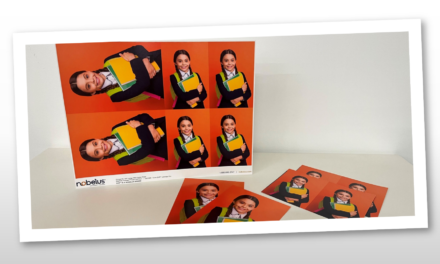
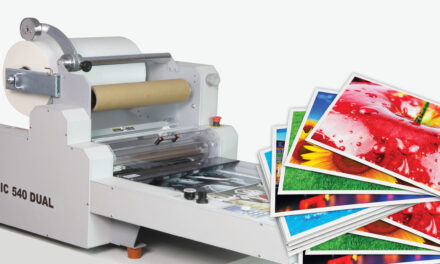
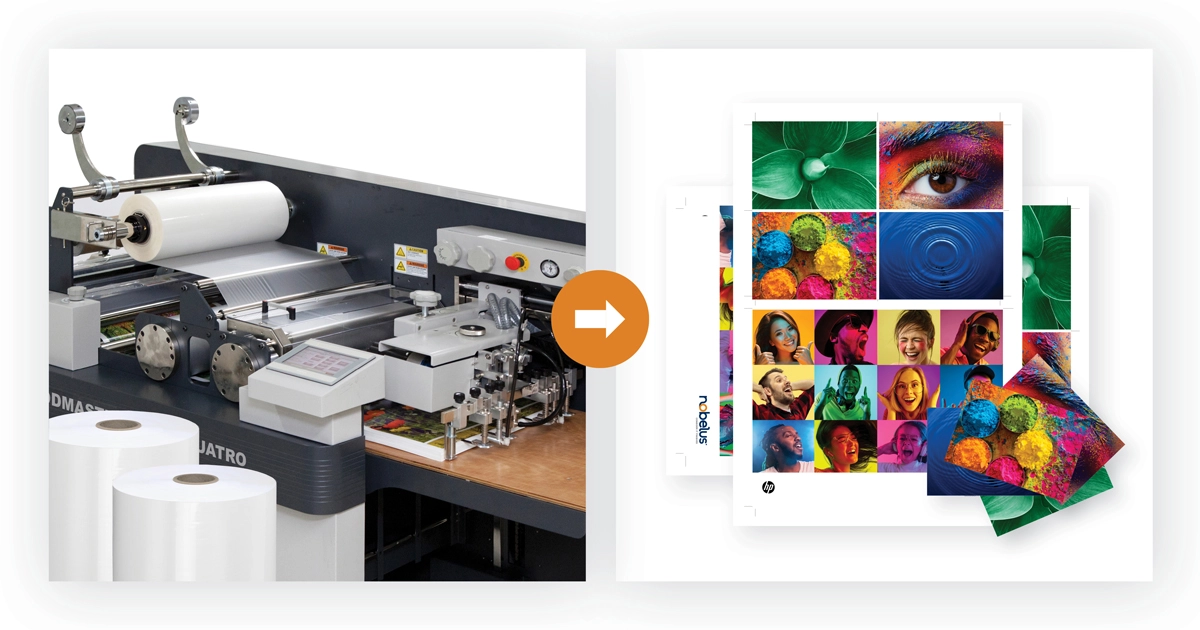
While traditional photo labs are having to pivot their processes and invest in new equipment, digital printers likely already have most of the equipment they need to serve the photo space in-house. Simply print the photographs using a digital press and then laminate the photos to protect them from damage. Specialty laminates like PlatinumSHR™ from Nobelus feature an embossable surface that gives photos the textured look and feel of a traditional photo luster, and printers can even make photopaper in-house by laminating the back of photos with a protective matte laminate. Tertiary processing equipment may include cutting and sorting machines depending on the specific application.
Perhaps the best and most unexpected aspect of digital photos is that they can produce sharper images with more dynamic colors than conventional silver halide. In the past, silver halide photos were indisputably of superior quality; however, with modern print engines like HP Indigo, the quality and accuracy of digital printing have closed the gap. In field tests, participants are unable to tell the difference between a silver halide photo and a digital photo, with digital photos performing better for detail-heavy imagery.
As photo labs struggle to meet demand in the aftermath of silver shortages and rising material costs, digital printers are in a perfect position to capture new business and expand their product offerings with just a few updates to their workflow and equipment investments.
READY TO EXPLORE POSSIBILITIES IN PHOTO?
If you want to discuss opportunities in the photo industry, get in touch with our in-house subject matter experts. They have worked closely with digital printers who branched into photo and can help you navigate everything you’ll need to consider, including ROI, customer base, equipment investments, expansion opportunities, and more. Explore other photo articles on our blog to learn more about the photo space and the advantages of digital photos.